The Opposition's cacophony of despair
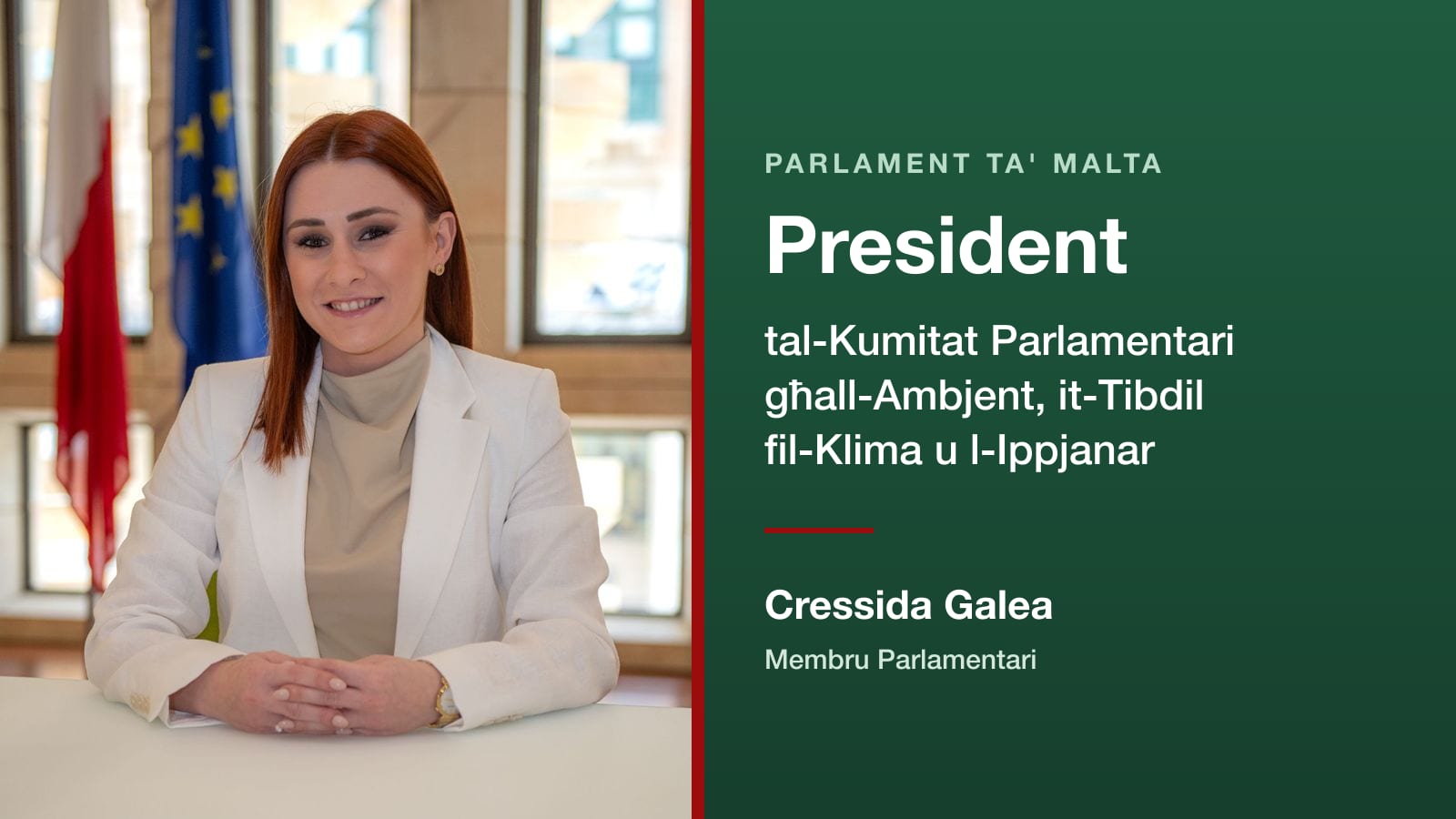
Cressida Galea
Membru Parlamentari
On the 3rd of November, Alex Borg had a valuable opportunity to present his vision for Malta's future. It was an occasion for ideas, clarity, and leadership. Yet, instead of outlining a constructive programme, much of his speech focused on criticism and pessimism, leaving only a few hurried minutes for policy proposals.
This approach was reminiscent of past moments when the Nationalist Party struggled to articulate a cohesive economic strategy, including the delay in responding to Malta's Vision 2050 consultation process, even after requesting an extended period for reflection.
Throughout his address, Alex Borg's tone was marked by a deep sense of negativity - exceeding even the most combative rhetoric of previous opposition leaders. He described Malta as "unjust," its economy as "built on clay," and our society as one where parents "despair" for their children's future. While passionate language has its place in politics, such sweeping generalisations risk obscuring the real progress our country continues to make.
The many speechwriters who messed up his speech all tried to come up with their negative touches, resulting in a cacophony of despair. It is worth noting that this bleak portrayal stands in sharp contrast with the recent IMF projections, which confirm Malta as the fastest-growing economy in the European Union until at least 2030. Even senior figures within the Nationalist Party have publicly acknowledged Malta's strong business climate, with their own Party CEO describing the country as "the go-to destination for business in the Mediterranean."
Among the more striking moments in Alex Borg's speech was the claim that the recent increase in pensions was insufficient to buy a whole loaf of Maltese bread: "only half." Such imagery may be intended to resonate emotionally, yet it inadvertently highlights how much stronger Malta's position is today compared to many other advanced economies, where pension increases have been frozen for years.
This government's record on pensions is clear. Spending on the two-thirds pension is projected to rise by 100 million, equivalent to an average increase of around 1,000 per pensioner in a single year. Pensioners born before 1962, who under past Nationalist policies led by Tonio Fenech in 2006 would have only received the cost-of-living adjustment, will instead see their pensions rise by approximately 25 per week, or 1,300 annually. That represents tangible support, not symbolic rhetoric.
The contrast between the two parties' approaches to economic policy has rarely been sharper. The Nationalist Party once prided itself on its economic expertise, but today, it appears to rely on proposals that lack coherence or viability.
Even more puzzling is that the family policy proposed under Alex Borg's leadership appears to create disparities between different types of families, particularly based on the number of children, leaving around 33,000 families with one child without access to tax benefits.
Before we had Lawrence Gonzi promising a tax cut before an election and then afterwards blaming the changed economic climate to postpone it. Now we have a Nationalist leader that does not even wait a couple of weeks before going back from a promise! A middle-class family on the median wage who has just had a baby under Alex Borg would get 5,000 plus interest in 18 years' time.
By contrast, Labour's family policy delivers immediate and meaningful support. A middle-class family welcoming a new baby today receives a 1,000 birth bonus and enjoys tax benefits worth 68,550 over 23 years. For a second child, that support rises to a 1,500 birth bonus and annual tax savings totaling 120,500. This is a clear, measurable difference in the lives of working families. Labour's deal for middle class parents is either 14 or 24 times better than Alex Borg's offering.
Malta deserves a debate grounded in facts, responsibility, and genuine vision, and not in exaggerated claims or borrowed slogans. Constructive opposition strengthens democracy; perpetual negativity weakens it.
As Diogenes once told Alexander the Great, sometimes the best course of action is simply to "stand a little out of my sun." Malta's light - built on resilience, growth, and social progress - should be allowed to shine.